



Freon, the most common type of refrigerant, should last for the entire life of your system. When your AC unit is working efficiently, you’ll never need to refill refrigerant because it’s not like gasoline, which is consumed and must be replenished—it’s just reused repeatedly.
However, it is possible you have low refrigerant levels due to a leak. For AC repair in Winter Park, FL, contact AmeriTech Air Conditioning & Heating today!
Signs you Might have a Leak in your Home
Low refrigerant can cause all sorts of issues, from decreased efficiency to complete system failure, so it’s important to get it fixed right away. If you notice that your AC unit is running more often than usual, or if it’s not keeping your home as cool as it used to, then there might be a problem with the refrigerant.
Loud noises and frost or ice on the outside of your unit are further indications that there might be a problem.
If you’ve noticed any of these issues, don’t hesitate to call AmeriTech Air Conditioning & Heating for AC repair. We have years of experience with all types of AC repairs, and we’ll work diligently to get your system up and running again as quickly as possible.
Why Would you Need a Replacement Unit?
If the issue is caught and fixed early on, it’s possible that our technicians could simply repair the leak and add more refrigerant to get things back up and running properly. However, if the refrigerant has been leaking for a while or there is some other underlying problem with the AC unit, then a complete replacement might be necessary.
In either case, it’s crucial to get the problem diagnosed and fixed as soon as possible to avoid further damage and more expensive repairs down the road.
Additionally, due to concerns that they damage the Earth’s ozone layer and contribute to global warming, Freon refrigerants with R-22 have been phased out. So, if you have an older AC unit with R-22, it will eventually need to be replaced with a newer model that uses a different refrigerant. However, your AC unit can still function perfectly well using the current refrigerant for many years.
Read More About – best air conditioning companies Orlando
What Causes Refrigerant Leaks in AC Units?
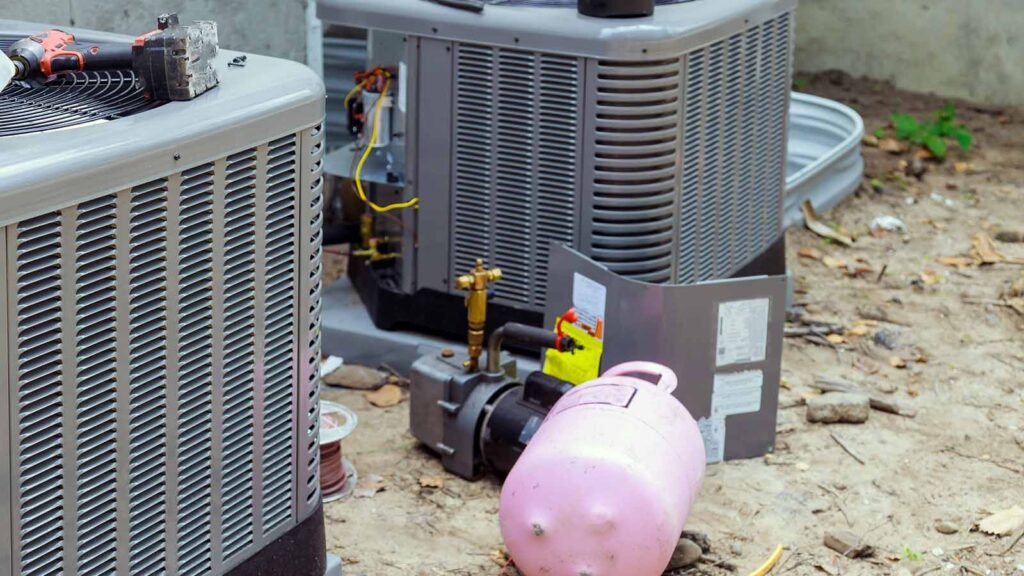
Refrigerant leaks don’t happen on their own, they’re usually caused by wear and tear over time. Vibrations from normal operation can loosen connections and fittings, creating small gaps where refrigerant escapes. Corrosion is another common culprit, especially in older systems or units exposed to harsh weather conditions.
How Much Does it Cost to Fix a Refrigerant Leak?
The cost depends on the severity of the leak and your system’s age. Simple repairs typically range from $200 to $1,500, including leak detection, repair, and refrigerant recharge. However, if you have an older R-22 system, replacement may be more cost-effective since R-22 refrigerant prices have skyrocketed due to the phase-out.
Give AmeriTech Air Conditioning & Heating a call today! Our technicians can help with your AC installation in Orlando, FL, and surrounding areas.